

How To Read A Fabric Label Properly
Most people check a label for two things: the fibre and the wash symbol. Those matter, but they are the last two lines of a much longer story. What decides whether a jacket still hangs straight in year six is the weight of the cloth, the way it was woven and what was done to it after it came off the loom.
We put the full spec on every Haman label because we would rather you bought the right thing once. Here is how to read it.
Weight Comes First
Cloth weight is given in grams per square metre. A summer shirting sits around 120gsm. A year round overshirt wants 380gsm or more. Our wool overshirt is 600gsm, which is why it holds a shoulder line without a lining. If a garment claims to be outerwear and the label says 240gsm, it is a shirt with ambition.
If a garment claims to be outerwear and the label says 240gsm, it is a shirt with ambition.
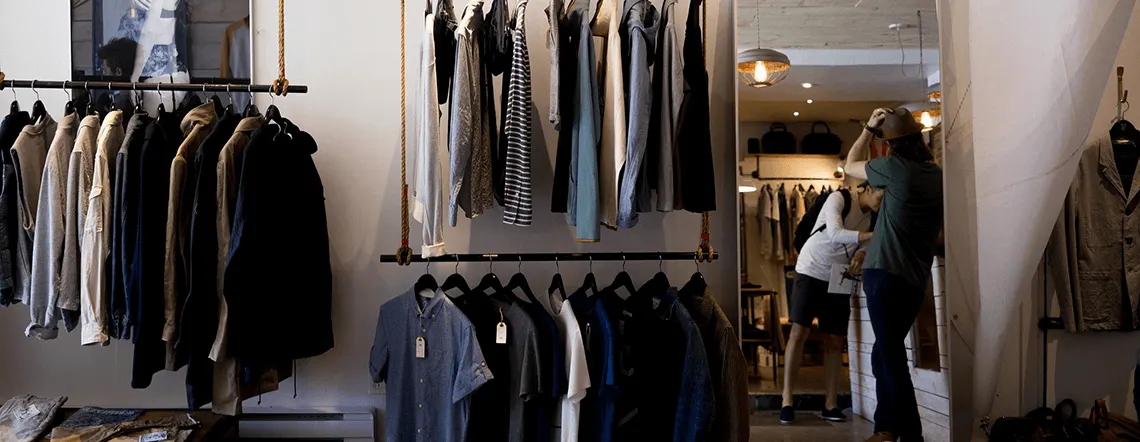 WatchReading A Label In Ninety Seconds
Then The Weave
Twill, plain and satin weaves age differently. A twill hides wear and creases less, which is why it is used for workwear and denim. A plain weave is crisper and shows every fold, which is what you want in a poplin shirt and never what you want in a trouser you will sit down in.
- Twill for anything that gets worn hard
- Plain weave where you want crispness
- Satin only where drape matters more than wear
- Rib and interlock for knitwear that holds shape

Finish Is The Quiet One
Finishing is everything done to cloth after weaving: washing, brushing, calendering, sanforising. It is rarely on a label and it is the difference between a cotton that softens and one that goes limp. We wash every cotton twice before cutting, which costs us a fortnight and saves you a season of shrinkage.
Ask a shop what the finish is. If nobody can tell you, that is an answer too.










Three Comments
Ines Rahman
16 September 2026The gsm point is the one nobody makes. I bought a coat last year that felt substantial in the shop and collapsed by February. Checked the label afterwards and it was 230.
ReplyMara Elvin
16 September 2026That is the usual story. Bring it in if you are near Leeds, a proper lining will get you a few more winters out of it.
ReplyDana Whitfield
18 September 2026Would love a follow up on knit gauges. Never know what I am looking at with jumpers.
Reply